






47 / 128
Great Henny - St Mary
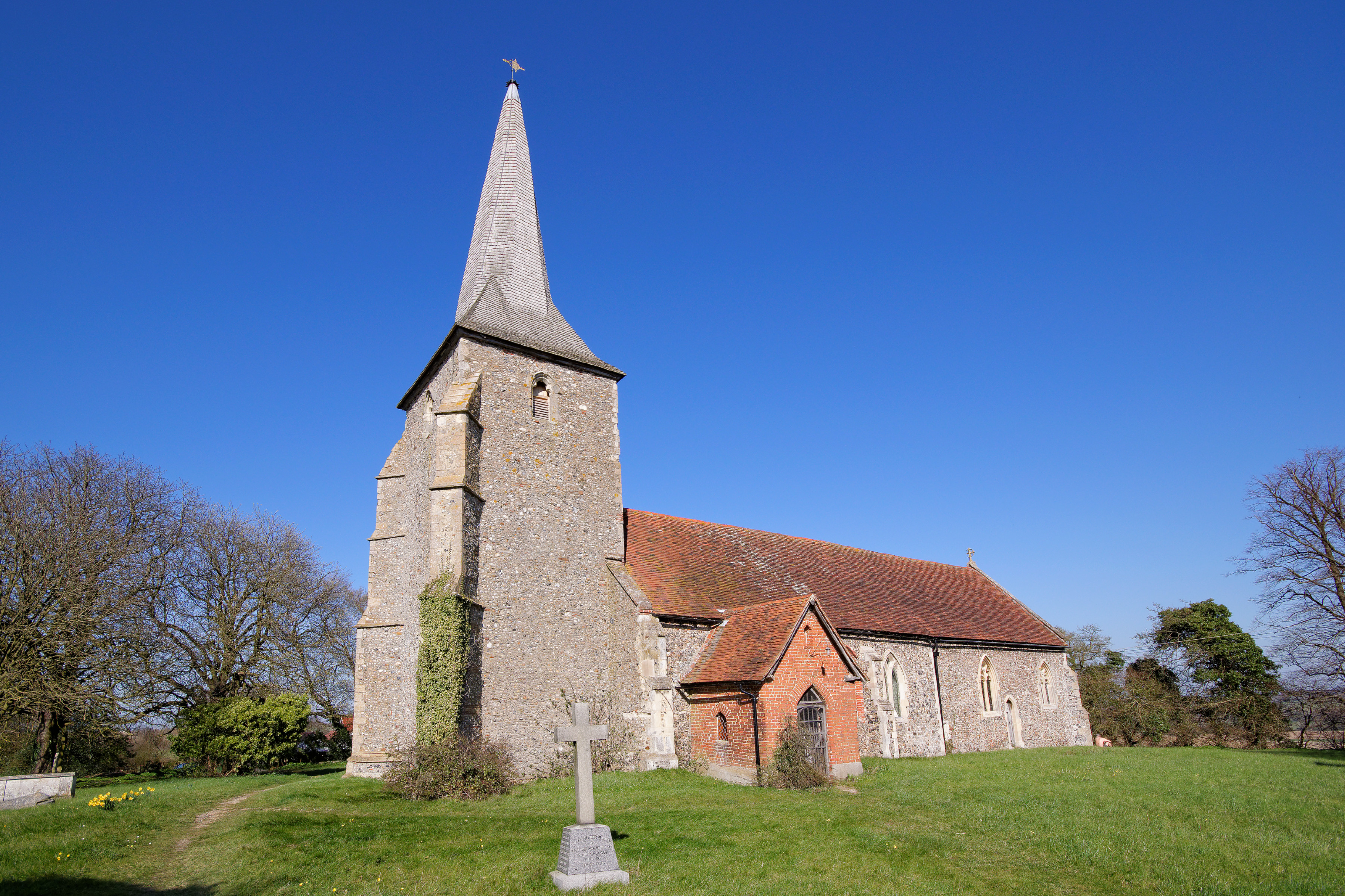
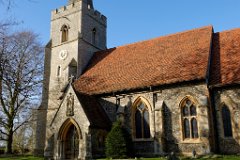
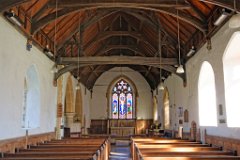
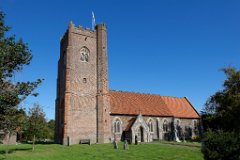
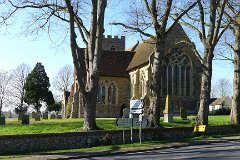
The twisted broach spire of St Mary's, Great Henny can be seen from miles around. The 18th century cedar shingle spire still suffers damage from woodpeckers, despite the nearby decoy tower. With the exception of the Norman flint tower, most of the building was re-fashioned in the 14th century. The nave and chancel are not separated by a chancel arch, and the roof line is a continuous straight line. There are signs on the east wall of the tower of an earlier higher nave apex, and this may have been lowered when both the chancel and nave were re-roofed in the 15th century. The diagonal buttresses to the tower were also added in the 15th century.
Walkers often rest at Great Henny church as it is on the route of the long-distance footpath St Edmunds Way.