70 / 103
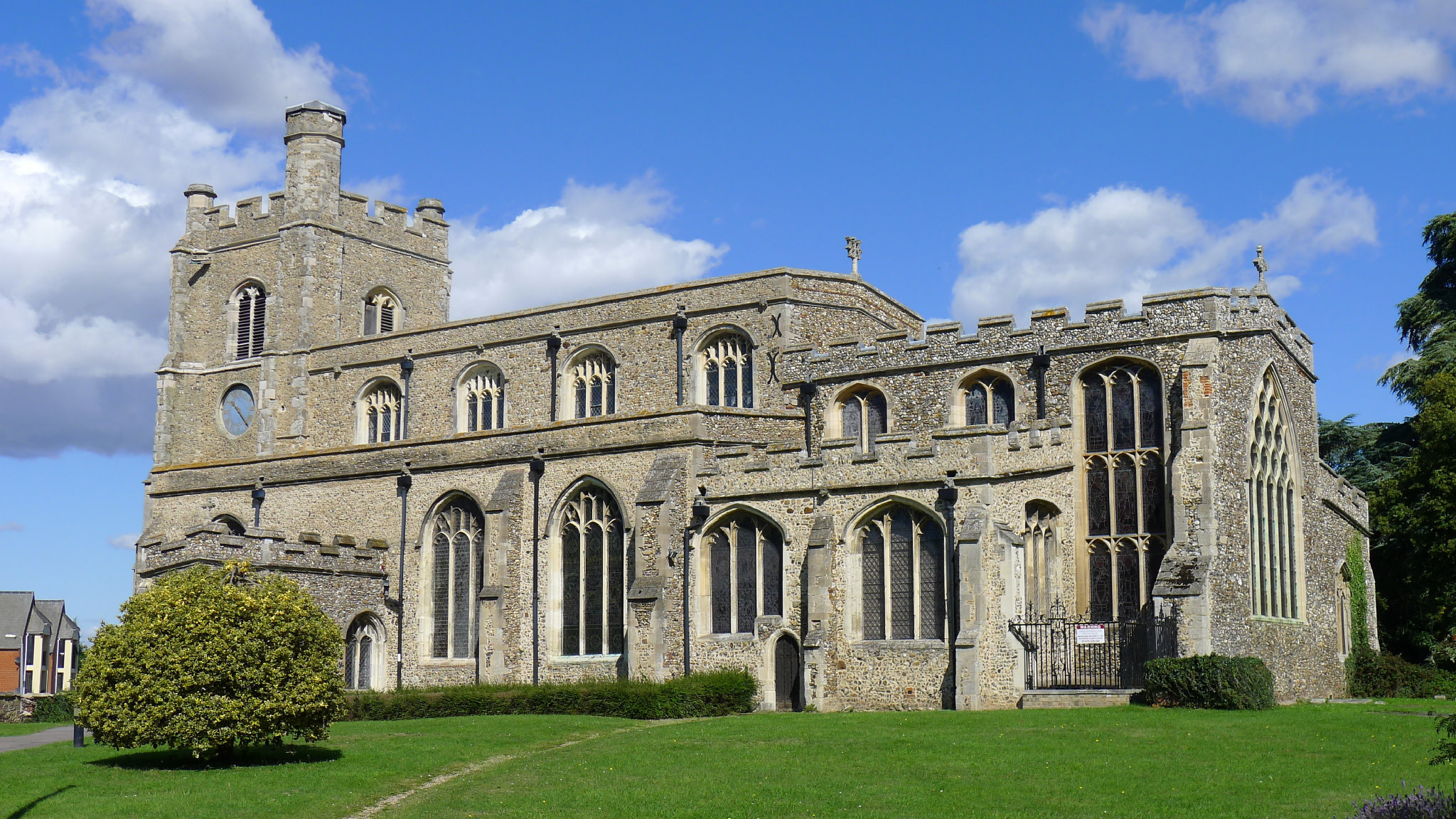
Bocking - St Mary
St Marys Church is built on land once owned by Aetheric, a Saxon Lord of the manor of Bocking, who fought the Vikings at the Battle of Maldon in 991. This was not a good thing: the battle was a rout, one of those curiously British heroic and magnificent failures, such as the Charge of the Light Brigade or Rourke's Drift. Men fought and fell : heroes died glorious and courageous deaths. No one from the defending army lived - except those who fled the battle. Aetheric was one of those who survived, and he subsequently willed his lands to Christ Church, Canterbury. One can only speculate as to his motives.
The chancel and the south aisle may be partly 14th century. The tower was built or rebuilt early in the 15th century, and c. 1450 the north and south arcades of the nave were rebuilt. However most of the church was rebuilt again in the late 15th century and the church was extensively restored in the 19th century. Grade I Listed.
The early 16th-century roofs of the nave and aisles, and the 13th-century ironwork of the south door, are interesting.