
38 / 128
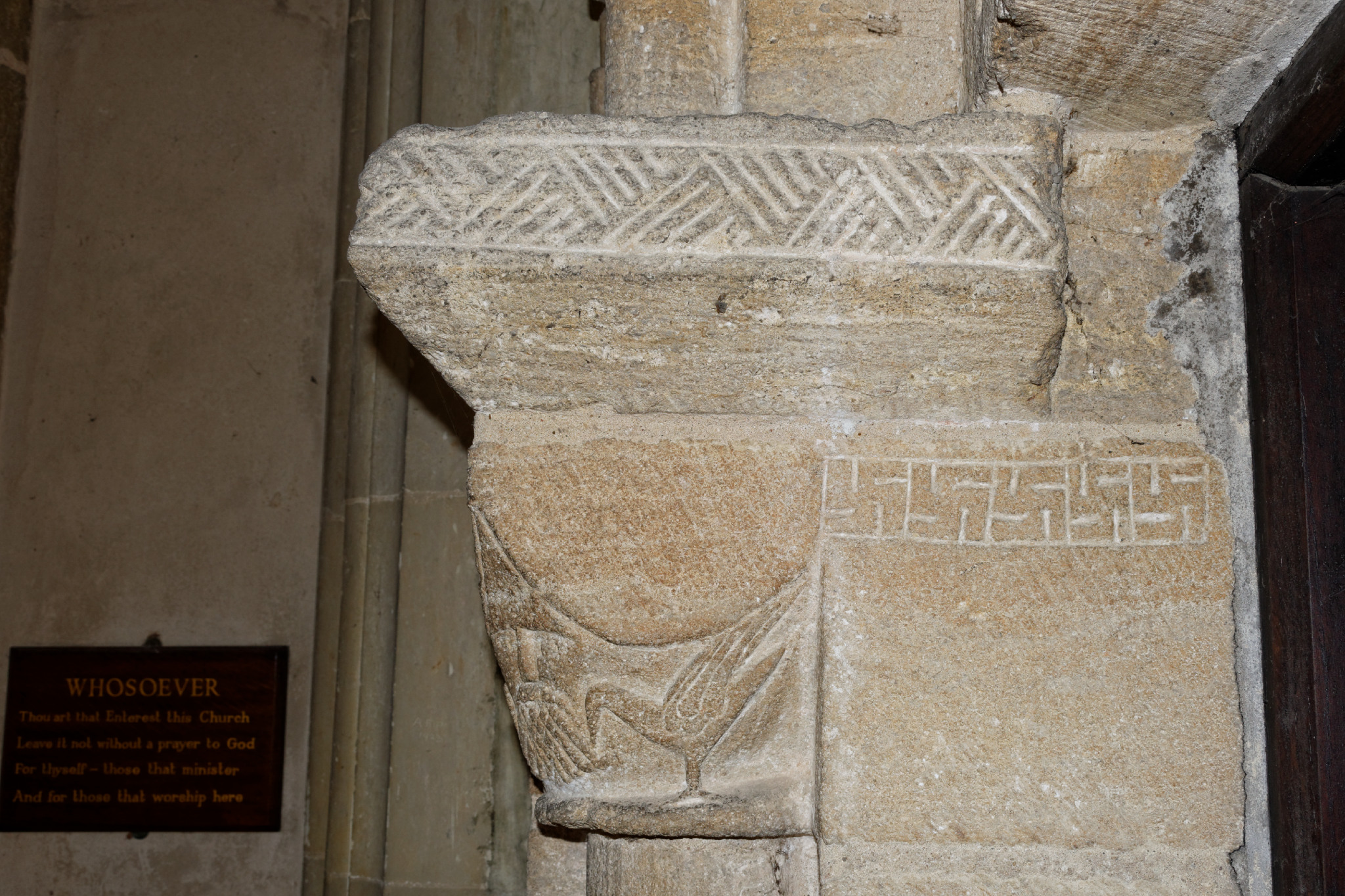
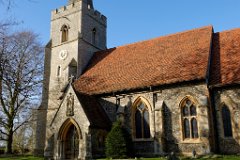
Great Canfield - South porch - Swastikas
On the left hand pillar is a Norman depiction of the Norse God Odin, with swastika designs behind. Odin is shown with his shamanic raven aides Hugin and Munin, reporting back. The two ravens travelled across the world every day collecting information for the god.
Swastikas are also known as fylfots. The symbol is common in pre-Christian cultures across Europe, but its significance here relates to Norse or Danish origins. Essex was a separate Danish pagan kingdom until c.896, and the symbols here are likely to represent Thor, the Norse God at Odin's side. As the most mortal-friendly of the Norse deities, Thor's symbol was also seen as a protective element.